



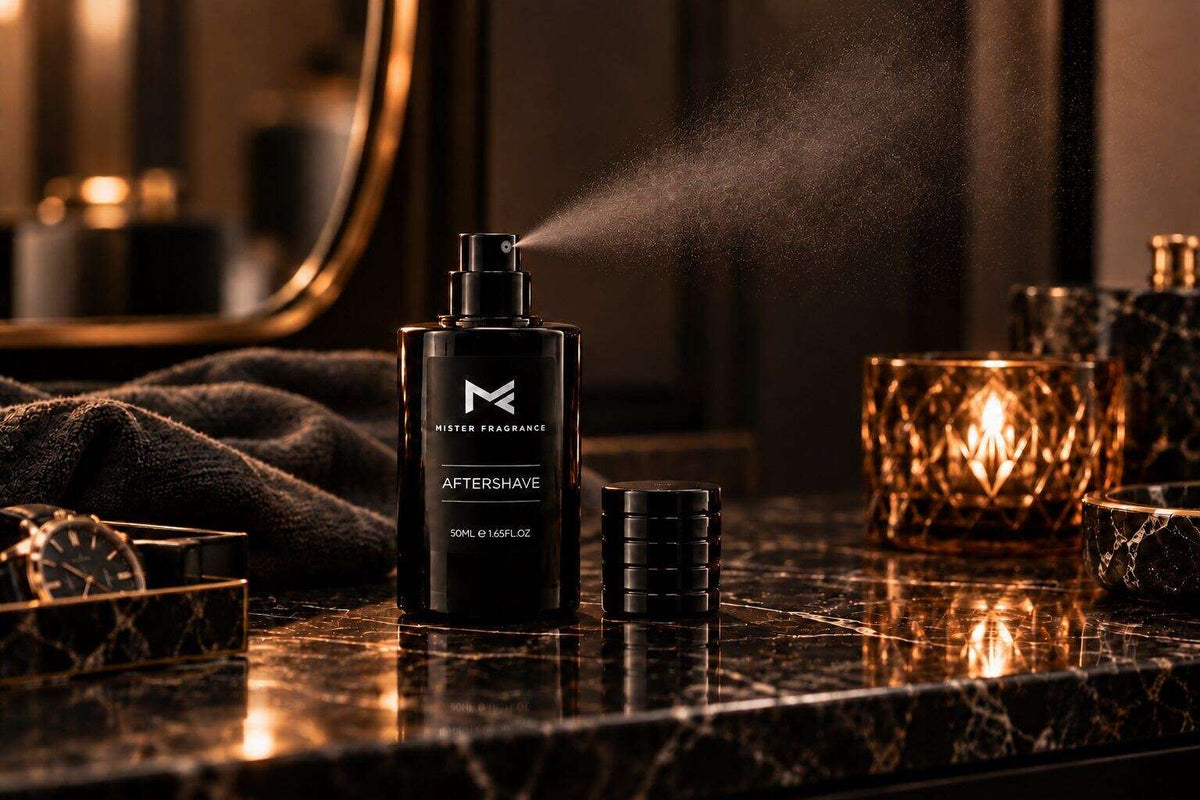
If you can't smell your aftershave after wearing it for a while, the fragrance has not necessarily disappeared. Your sense of smell can adapt to a familiar scent, making it harder for you to notice even while traces remain detectable to people around you.
Application, fragrance concentration, skin condition, storage and temporary changes in your sense of smell can also influence what you perceive.
Before deciding your aftershave is not lasting, work through these ten common explanations.
Your Nose Has Become Used to the Fragrance

The most common reason you stop noticing your aftershave is olfactory adaptation, also known as nose blindness. Continuous exposure can make a familiar scent seem weaker over time.
Your fragrance stays close to your nose, especially when applied around the neck or upper chest. This repeated exposure can reduce how strongly you perceive it.
Instead of spraying more immediately, step into fresh air and reassess later. You can also ask someone nearby whether they can still detect the scent from a normal distance. This gives you a more reliable indication of whether the fragrance is still noticeable.
You Are Wearing Too Much Aftershave
Applying extra fragrance can increase exposure without making it easier for you to judge the scent accurately.
Heavy application surrounds you with more aroma from the start. As your nose adapts, you may still feel as though the fragrance has faded, leading to another spray and an unnecessarily strong result for people nearby.
Begin with a controlled amount and assess how the fragrance develops before topping up. The ideal quantity varies by formula, setting and personal preference.
Consider your surroundings as well. An application suited to an evening outdoors may feel excessive in an office, car or other enclosed space.
More fragrance is not always the solution to noticing less.
Your Skin Is Dry
Dry skin can influence how fragrance sits and develops, although the effect varies between people and formulas. If your skin feels dry, apply an unscented moisturiser first and allow it to absorb before using aftershave. This can create a more consistent surface without introducing another scent.
Avoid treating moisturiser as a guaranteed longevity fix. Fragrance performance also depends on formulation, concentration, temperature, application and environment. For a fair comparison, keep the rest of your routine consistent across several wears and judge the fragrance under similar conditions.
You Have Chosen a Lighter Fragrance Concentration
Fragrance concentration can influence how a scent wears, although it does not determine exact longevity or projection. Eau de Toilette usually contains less fragrance material than Eau de Parfum, while Extrait de Parfum sits higher.
Mister Fragrance uses oil-based Extrait de Parfum formulas with a verified 35–40% fragrance-oil concentration. This can suit shoppers seeking a richer, fuller scent experience and may require fewer sprays. If concentration matters to you, explore the men's inspired aftershave collection for different scent profiles in Extrait format.
The Fragrance Has Naturally Reached Its Base Notes
Fragrance changes as it develops on the skin. Top notes create the opening impression, heart notes shape the middle and base notes become more noticeable later in the dry-down.
If you mainly associate your aftershave with its brighter opening, the later stages may seem weaker even when the fragrance is still present. Base notes can sit closer to the skin and feel less prominent than the first spray.
Check the scent at intervals rather than judging it from the opening alone. This gives a clearer view of how the fragrance develops over time.
Your Sense of Smell Is Temporarily Reduced
A temporary change in your sense of smell can make a familiar aftershave seem unusually faint.
Colds, flu, nasal congestion and allergies such as hay fever can affect your ability to detect aromas. Environmental conditions can also influence how clearly you notice a fragrance at a particular moment.
Compare your aftershave with other familiar smells. If coffee, food, shampoo or household products also seem less noticeable, the fragrance itself may not be the main issue.
Avoid using aftershave performance as a way to diagnose a health problem. A persistent or unexplained change in smell is better assessed through appropriate medical guidance.
Once your normal sense of smell returns, the same fragrance may appear far more distinct.
You Are Applying It Ineffectively
A consistent application routine makes fragrance easier to evaluate.
Apply aftershave to clean skin and focus on a small number of areas, such as the sides of the neck or wrists. You do not need to cover every pulse point to achieve a noticeable result.
If you spray your wrists, allow the fragrance to settle rather than rubbing them together. Rubbing is unnecessary and can interfere with your ability to assess the fragrance in a consistent manner.
Avoid repeated top-ups simply because you have stopped noticing the scent yourself. If olfactory adaptation is involved, applying more may increase the amount around you without restoring your perception.
Keeping your application method consistent also makes comparisons between different fragrances more meaningful.
Your Aftershave Has Been Stored Improperly
Heat, direct light and fluctuating temperatures can affect fragrance quality over time. Avoid keeping aftershave on sunny windowsills, near radiators or in warm, humid rooms such as bathrooms.
A cool, dry cupboard or drawer is a better choice, and the original box can provide extra protection from light.
Storage matters even more with older bottles. If the opening smells noticeably different or the fragrance seems altered compared with when you first bought it, poor storage may be a factor. In some cases, an ageing bottle may eventually need replacing.
Your Skin And Surroundings Are Changing The Experience
Skin condition, body temperature, weather and application can influence how a fragrance develops and how strongly you perceive it. The same scent may seem different in warm weather, colder conditions or on another person.
Fragrance can also smell different on skin than on a testing strip, which is why proper wear testing matters. Avoid assuming your aftershave has suddenly stopped suiting you after one application. Wear it on several occasions and compare the results under different conditions before deciding whether its performance or scent profile has changed.
Your Aftershave Is Still Noticeable To Everyone Else

You may stop noticing your own aftershave while people around you can still detect it. Familiarity makes your nose less reliable after prolonged exposure.
Before reapplying, ask someone nearby whether they can smell the fragrance from a normal conversational distance. This gives you a better indication of its presence than repeatedly checking your wrist.
Rotating between different scent profiles can also refresh your perception. You do not need a large collection. Even switching between two contrasting fragrances can make each one easier to notice and appreciate.
If you can’t smell your aftershave, start by avoiding an immediate top-up. Give yourself some distance from the scent and ask someone nearby whether they can still detect it. Review your application, storage and skin preparation, then consider how the fragrance develops from opening to base notes.
A quieter dry-down does not mean it has disappeared. If your current scent no longer suits your preferences, exploring a different profile or higher-concentration Extrait de Parfum can be a sensible next step.


