



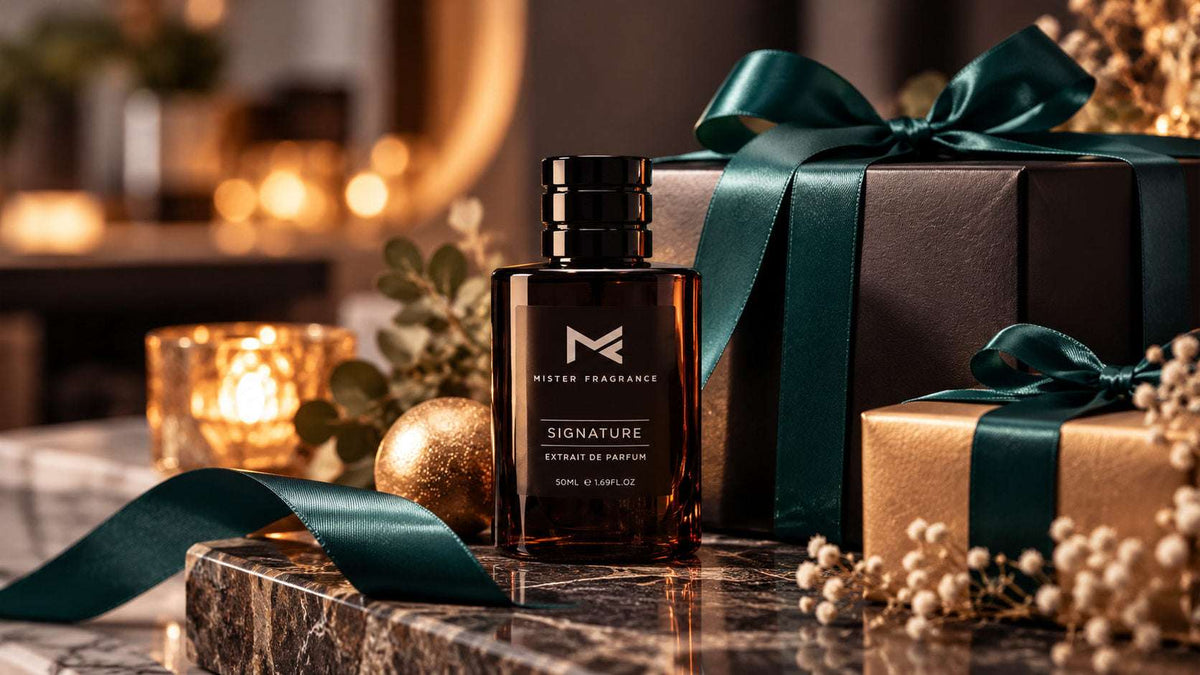
Choosing fragrance for someone else does not need to rely on guesswork. Start with the scents they already wear, then look for shared fragrance families, recurring notes and the occasions they suit. From there, consider lifestyle, season, concentration and how versatile the gift needs to be.
This gives you a clearer basis for choosing a fragrance they are more likely to enjoy, while avoiding assumptions based on packaging, gender labels or personality alone and keeps the choice focused on evidence.
Check Which Fragrances They Already Wear
The easiest way to choose a fragrance is to look at the scents they already enjoy wearing.
Check:
-
Bottles they use regularly
-
Fragrances they have repurchased
-
Scents worn for work, evenings or occasions
-
Shared scent families
-
Styles they avoid
Look for patterns rather than an exact replacement. Someone who repeatedly wears fresh citrus fragrances is more likely to enjoy a similar profile than a rich gourmand chosen without evidence.
Identify the Scent Families They Prefer

Fragrance families help narrow a large selection into styles the recipient is more likely to enjoy.
|
Fragrance family |
Typical character |
|
Fresh |
Clean and airy |
|
Citrus |
Bright and zesty |
|
Floral |
Soft or rich |
|
Fruity |
Juicy and sweet |
|
Woody |
Warm and earthy |
|
Amber |
Smooth and rich |
|
Spicy |
Aromatic and warming |
|
Gourmand |
Sweet and edible |
Use their existing favourites as your guide. Mister Fragrance's women inspired perfumes can help you compare suitable scent directions.
Look at Their Favourite Fragrance Notes
Recurring notes can reveal preferences within a broader scent family.
Check descriptions of fragrances they already own and look for repeated notes such as vanilla, citrus, lavender, woods, musk or amber. One familiar note should not decide the gift, since many appear across different scent styles.
Instead, look for combinations that recur across several favourites. Mister Fragrance's men's inspired aftershaves can then help you compare fragrances with similar note profiles.
Consider Their Personality
Personality can help refine a fragrance choice, but it should never be the main deciding factor.
Someone with understated tastes may prefer a restrained profile, while a fragrance enthusiast may enjoy something more distinctive. A trend-led recipient might also be open to newer scent styles.
Avoid stereotypes. Personality does not reliably predict whether someone prefers citrus, florals, woods or gourmands.
Use it only as a supporting clue after considering the fragrances they already wear.
Think About Their Lifestyle
A fragrance gift should suit the recipient’s routine as well as their taste.
Someone who works in an office may prefer an adaptable scent for shared spaces, while a person with an active social life may enjoy a richer evening fragrance. If they own only one or two scents, versatility can matter more. A collector may appreciate something more distinctive.
Matching fragrance style to everyday habits makes the gift more practical and increases the chance it will be worn regularly.
Choose When They Will Wear It
The intended occasion gives you another useful filter.
|
Occasion |
Useful starting point |
|
Work |
Fresh, clean, restrained styles |
|
Everyday |
Versatile profiles |
|
Evenings |
Richer woody, amber or gourmand directions |
|
Special occasions |
More distinctive scent styles |
Treat these as guidance rather than fixed rules.
If the recipient already wears rich fragrances during the day, follow their established taste. If they reserve lighter scents for work, that pattern deserves more weight than general fragrance advice.
Consider the Time of Year
Season can help you choose between several suitable options.
Fresh, citrus and airy fragrances can feel particularly well suited to warmer weather. Woody, spicy, amber and gourmand profiles can feel more natural during cooler months.
Personal preference still matters more than the season. Someone who loves a rich amber fragrance may wear it throughout the year.
Use seasonal guidance as a final filter when two or three fragrances already fit the recipient's preferences.
Decide How Strong It Should Be
Fragrance concentration can influence how rich or intense a scent feels.
Eau de Toilette is generally lighter than Eau de Parfum, while Extrait de Parfum sits at the higher-concentration end. Mister Fragrance uses oil-based Extrait de Parfum formulas with 35–40% fragrance oil, which may suit someone who prefers a fuller scent experience.
Concentration does not guarantee longevity or projection. Performance still varies with formulation, notes, skin, application, temperature and environment.
Look Beyond Gender Labels
Fragrance style is usually more informative than a "for him" or "for her" label.
Citrus, woods, florals, amber, musk and gourmand notes can appear across men's, women's and unisex fragrances. A recipient may also enjoy scents marketed across several categories.
Focus on the profiles they choose rather than assuming certain notes belong to one gender.
This approach gives you a wider range of relevant options while keeping the decision grounded in personal taste.
Compare It with a Designer Fragrance They Like
A favourite designer fragrance can give you a useful reference point.
Identify its main fragrance family, recognisable notes and overall style, then look for inspired scents with a related profile. The aim is not to find an identical formula. Inspired fragrances are independently created alternatives, not exact copies.
This approach helps you use an existing favourite as evidence, making it easier to choose a gift with a familiar scent direction.
Read the Fragrance Description Carefully
A fragrance description should help you understand the scent before buying.
Check:
-
Fragrance family
-
Top, heart and base notes
-
Overall scent style
-
Suggested occasions
-
Concentration
Top notes shape the opening, while heart and base notes become more noticeable during the dry-down. This means the first impression may not reflect the full scent.
For more detail, read Mister Fragrance’s guide on how to choose a fragrance based on scent profiles.
Use Customer Reviews for Extra Guidance
Customer reviews can add context when you are deciding between similar fragrances.
Look for recurring descriptions of sweetness, freshness, richness or how the scent changes after application. Repeated observations may help you understand how other wearers perceive the fragrance.
Treat reviews as personal experiences rather than objective measurements.
Comments about longevity, projection and strength can vary considerably because fragrance behaves differently according to skin, application and environment.
Choose an Inspired-by Fragrance
Inspired fragrances can suit gift buyers who know the recipient enjoys a particular designer-style scent direction and want a more accessible option.
Start with the recipient’s preferences, then compare fragrance family, notes and overall style. Mister Fragrance creates independent fragrances inspired by well-known scent profiles, with no affiliation to or endorsement from designer brands.
Its range uses oil-based Extrait de Parfum formulas with 35–40% fragrance oil, offering a high-concentration format once you have identified a suitable scent direction.
Pick a Versatile Scent When You Are Unsure

When information is limited, choose a fragrance with a balanced profile suited to several everyday situations.
Avoid highly distinctive styles unless you know the recipient already enjoys them. If samples are available, they can reduce uncertainty by letting the recipient experience the opening, dry-down and overall development on skin.
A useful decision process is:
Existing favourite → fragrance family → recurring notes → occasion → concentration → sample where possible
Find Their Next Fragrance with Mister Fragrance
Start with what the recipient already enjoys, then narrow the choice by fragrance family, favourite notes, occasion and concentration.
A known designer favourite can also provide a useful reference point when exploring related scent profiles. Mister Fragrance offers independently created, luxury-inspired fragrances in oil-based Extrait de Parfum formulas containing 35–40% fragrance oil.
Use those clues together to make a more considered choice and explore a fragrance suited to the recipient’s established preferences.


