



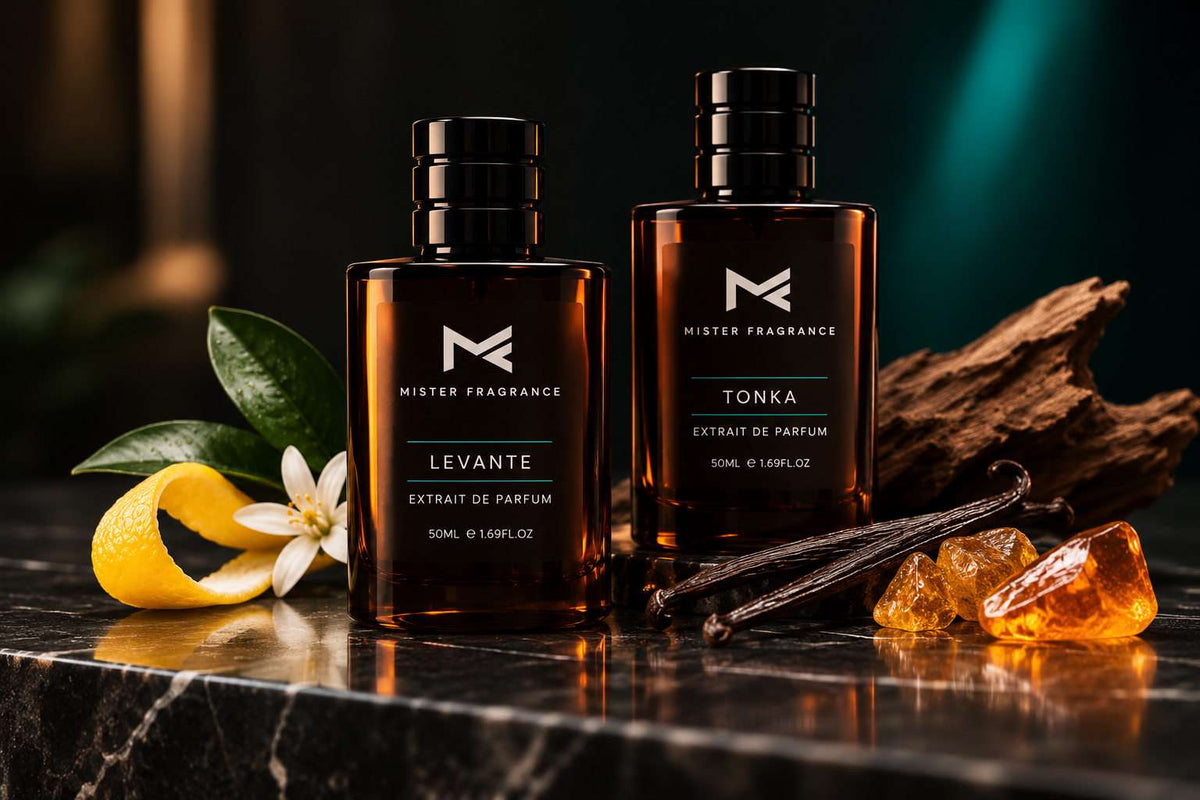
Layering fragrances means wearing two scents together to create a different overall profile. Beginners can start confidently by choosing complementary fragrance families, applying each lightly and allowing both scents time to develop.
Inspired fragrances make it easier to explore a wider fragrance wardrobe without relying on luxury-priced bottles. Mister Fragrance creates independent Extrait de Parfum alternatives with a verified 35–40% fragrance-oil concentration, making careful application especially useful when testing new combinations.
1. Start With Clean Skin
Clean skin gives fragrances a neutral base, making it easier to judge how two scents work together.
Previous perfume, fragranced skincare or scented body products can alter the result. Apply your chosen combination to skin free from other noticeable scents for a clearer comparison.
Testing under similar conditions each time also helps. This makes it easier to identify whether a change comes from the fragrance pairing itself rather than another product already on your skin.
2. Moisturise Before Applying
Moisturised skin can provide a more even surface for fragrance application and may influence how the scent develops during wear.
Choose an unscented moisturiser where possible. A heavily fragranced lotion adds another scent profile to the combination and can make the result harder to assess.
Moisturising should not be treated as a guarantee of longer wear. Fragrance performance varies according to formulation, fragrance notes, skin, temperature, application and environment. For broader application advice, read our guide on how to make aftershave last longer.
3. Begin With Two Fragrances

Start with two fragrances to make each combination easier to assess.
-
Choose one scent as the main fragrance.
-
Add a second with a supporting profile.
-
Apply both lightly.
-
Notice how the pairing develops over time.
Using more scents can make it harder to identify what works. Explore different styles within the men's inspired aftershaves collection to build a more varied fragrance wardrobe for future layering.
4. Match Complementary Notes

Complementary scent families give beginners a useful starting point for creating balanced fragrance combinations.
|
Fragrance Pairing |
Why It Can Work |
|
Citrus + woods |
Brightness with depth |
|
Vanilla + amber |
Warmth with sweetness |
|
Floral + musk |
Softness with a smooth base |
|
Fresh + aromatic |
Crispness with herbal character |
These pairings are guides rather than rules. Season and occasion can also influence which combinations feel most suitable.
5. Apply the Stronger Scent First
Applying the more dominant fragrance first can give the combination a clearer foundation, with the second scent adding contrast or softness.
Treat this as a starting method rather than a fixed rule. Strength varies with concentration, formulation, notes and skin response, so test both orders if needed.
With Mister Fragrance Extrait de Parfum at 35–40% fragrance oil, lighter application is especially useful when layering concentrated scents.
6. Use Less of Each Fragrance
Use a lighter application of each fragrance when layering to keep the combination balanced.
Applying your usual amount of two scents can make the result feel too dense. Start conservatively, then adjust during a later test if one fragrance dominates.
Compare different profiles within the women's inspired perfumes collection when exploring potential pairings. Focus on balance rather than strength, allowing each fragrance to contribute without overwhelming the other.
7. Layer Different Areas
Layered fragrances do not need to sit directly on top of each other. Applying them to separate areas can make the combination easier to control.
Try one fragrance on the wrists and another around the neck, or use different pulse points to compare how each develops.
Clothing can provide another option, although fragrance oils or coloured liquids may mark some fabrics. Test an inconspicuous area first and follow the product’s application guidance before spraying garments.
8. Allow Each Scent to Settle
Do not judge a layered combination from the first few minutes.
Fragrances develop through different stages. The opening is what you notice immediately after application. Heart notes emerge as the opening settles, while base notes form the longer-lasting foundation of the scent profile.
A pairing which feels sharp at first may become smoother later. The reverse can also happen.
Give each test enough time to reveal its dry-down before deciding whether to repeat, adjust or abandon the combination.
9. Test Combinations at Home
Test new fragrance combinations at home before wearing them to work, a date or an event. This gives you time to judge the pairing without pressure.
Wear the combination for several hours and note which fragrance dominates as the scent develops. Try it again in different temperatures, since weather can affect how a fragrance behaves on your skin.
Keeping brief notes on successful pairings also helps you recreate combinations you enjoy and adjust those needing better balance.
10. Choose Inspired Fragrances You Enjoy
Start with fragrances you already enjoy wearing on their own. This gives every bottle a purpose, even when you are not layering.
Inspired fragrances can make it easier to explore different scent families without investing in several luxury-priced bottles. Mister Fragrance offers independently created alternatives inspired by well-known scent styles, with no designer affiliation or endorsement.
Build gradually by adding complementary or contrasting profiles, giving you more layering options without making your fragrance wardrobe unnecessarily complicated.
Common Fragrance Layering Mistakes to Avoid
Fragrance layering becomes easier when you remove a few common sources of confusion.
-
Combining too many scents: Two fragrances give you clearer feedback than a crowded mixture.
-
Overspraying: More fragrance does not guarantee a better balance.
-
Choosing combinations without considering scent families: Understanding the broad profile of each fragrance improves your chances of creating a coherent result.
-
Judging the opening alone: The dry-down can change the relationship between both scents.
-
Changing several variables at once: Adjust one fragrance, application area or order at a time.
-
Layering for every occasion: Some fragrances are complete enough alone. Wear them individually when adding another scent makes the profile less focused.
Fragrance Layering FAQs
Can You Layer Any Two Fragrances?
You can test any two fragrances, although not every pairing will suit your taste. Starting with complementary scent families gives beginners a more structured way to experiment.
Does Layering Make Fragrance Last Longer?
Not necessarily. Wearing two fragrances changes the overall scent profile, although it does not guarantee longer wear. Longevity depends on formulation, fragrance notes, concentration, skin, temperature, environment and application.
Which Fragrance Families Work Well Together?
Citrus and woods, vanilla and amber, floral and musk, plus fresh and aromatic profiles are useful starting points. These are guidelines rather than fixed rules.
How Many Fragrances Should You Layer?
Begin with two. Once you understand how different combinations behave, you can experiment further if you want greater complexity.
Should You Spray Both Fragrances in the Same Place?
You can apply both to the same area or use separate pulse points. Testing both approaches can help you find the balance you prefer.
Successful layering depends less on collecting as many bottles as possible and more on understanding the fragrances you already own. Start with two, apply each with restraint, allow the dry-down to develop and record the combinations worth repeating.
Mister Fragrance’s 35–40% fragrance-oil Extrait de Parfum format gives fragrance enthusiasts a concentrated foundation for building a varied scent wardrobe. Explore complementary families, compare how they develop on your skin and add new profiles with a clear purpose rather than collecting at random.


