



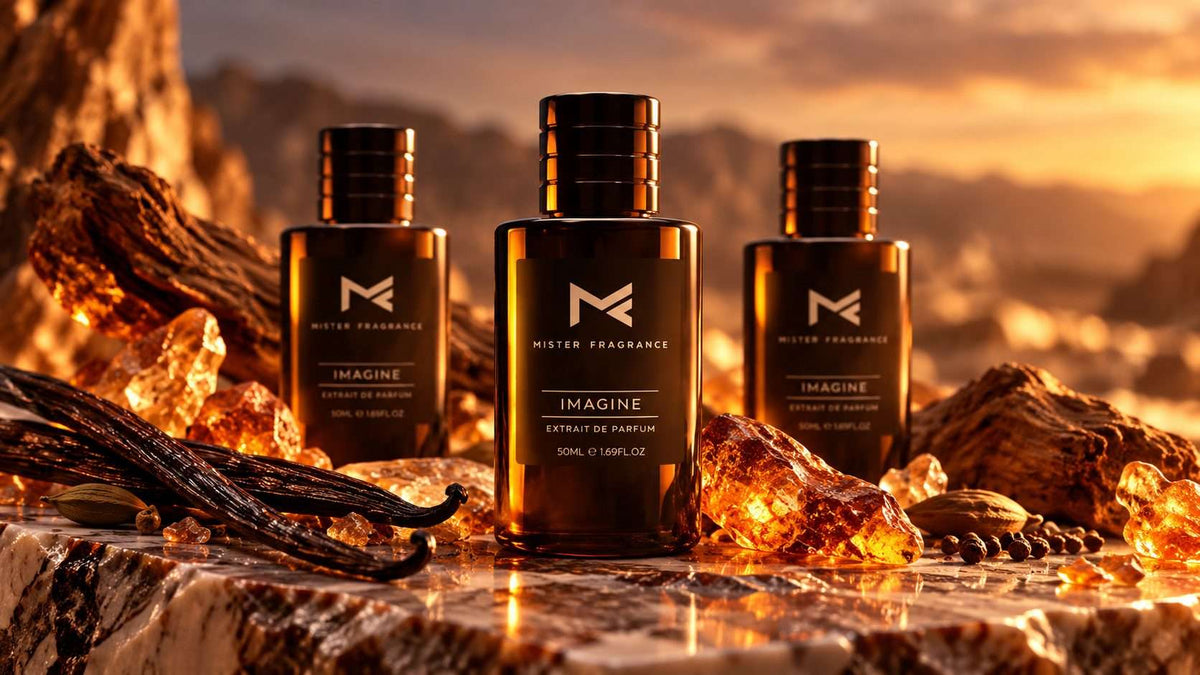
Amber in fragrance usually smells warm, rich, smooth and slightly sweet, with resinous depth rather than the brightness of citrus or the freshness of aquatic notes. In modern perfumery, amber usually describes an accord rather than a single ingredient, commonly built from materials such as labdanum, benzoin and vanilla or vanillin.
Supporting woods, flowers, spices and musks can shift its character dramatically. Understanding these variations helps you recognise amber fragrances and decide which styles best suit your taste and wardrobe preferences.
Warm and Rich

Amber is most commonly described as warm and rich, giving fragrances a smooth, comforting depth rather than a sharp or fresh character. Think of warm vanilla, polished wood and fragrant resin beside freshly cut lemon: citrus feels bright and immediate, while amber feels deeper and rounder.
This profile can suit autumn, winter and evening wear particularly well. In premium-inspired fragrances, amber can also add body and depth to the base without making every composition smell heavy or overly sweet overall.
Sweet and Resinous
Amber can smell sweet without becoming sugary. Vanilla or vanillin may bring familiar sweetness, while benzoin can add a smooth, balsamic quality and labdanum can introduce a darker resinous edge. Together, these elements can create a scent closer to warm resin and softly spiced vanilla than confectionery.
The balance depends on the composition. Vanilla-led amber may feel more gourmand, while darker resins and woods can make the fragrance feel richer, drier and less overtly sweet overall on skin over time.
Creamy and Smooth
Amber can feel rounded and creamy, especially alongside vanilla, sandalwood, musk or soft florals. Here, creamy describes the scent’s texture rather than the literal smell of cream. These pairings can soften sharper edges and create a smoother transition between sweet, floral and woody notes.
This style suits people who prefer warmth without a strongly smoky or spicy finish. Mister Fragrance’s women's inspired perfumes include varied profiles where amber can sit beside softer, sweeter or more floral elements.
Deep and Balsamic
Darker amber accords can smell balsamic, resinous and substantial.
In fragrance language, balsamic usually refers to the sweet, warm character associated with fragrant resins rather than anything connected with balsamic vinegar. These notes tend to sit deeper within a composition and become more noticeable as brighter opening notes fade.
This quality can make amber particularly effective in fragrances designed for dinners, events and evening wear. The finished effect still depends on the full formula, application, skin and environment.
Spicy and Intense
Spices can turn amber from soft and comforting into something more energetic and pronounced.
Cinnamon can strengthen its sweetness and warmth. Cardamom may introduce an aromatic, slightly fresh spice. Pepper can add dryness and lift, while clove can create a darker, richer impression.
Spicy amber fragrances are well suited to evenings, colder months and occasions where you want a more noticeable scent profile. For work or daytime wear, a lighter application may be preferable when the spice accord feels particularly assertive.
Woody and Earthy
Woody notes can make amber smell drier, darker or more grounded.
Sandalwood may emphasise amber's creamy character, while cedarwood can introduce a drier woody edge. Patchouli may add earthiness and depth. Vetiver can shift the composition towards a drier, greener or more textured profile depending on how it is used.
People who dislike noticeably sweet fragrances should not dismiss amber altogether. A woody amber can feel considerably less gourmand than one centred on vanilla.
Soft and Powdery
Amber can also take on a soft, powdery finish when paired with notes such as iris and musk.
These combinations can make the fragrance feel cleaner, smoother and less densely resinous. Powdery amber styles may appeal to people looking for an easy everyday fragrance rather than something reserved for evenings.
Amber is not restricted by gender. Within Mister Fragrance's men's inspired aftershaves, warm accords can appear beside woods, spices, citrus and aromatic notes to produce very different styles.
Smoky and Luxurious
Some amber fragrances move into darker territory through incense, oud-style accords or leather notes.
Incense can introduce smoke and dryness. Leather can add a darker, textured quality, while oud pairings may create a heavier woody profile. These combinations tend to feel further removed from soft vanilla-led amber.
They can suit evening wear and colder weather particularly well, especially for someone who wants more depth than a fresh or clean everyday scent provides.
Amber in Perfume
Amber in perfume can take several recognisable forms, depending on the notes surrounding the accord.
Common styles include:
-
Floral amber, where flowers brighten the warmth.
-
Gourmand amber, where vanilla and sweeter notes stand out.
-
Spiced amber, combining resinous depth with aromatic spices.
-
Soft amber, using musk or powdery notes for a smoother finish.
-
Woody amber, where woods reduce the emphasis on sweetness.
Exploring different amber perfumes helps you compare these styles and find the profile that suits you best overall.
Amber in Aftershave
Amber in aftershave commonly works alongside woods, spices, citrus or leather to create warmth beneath fresher or drier notes.
A citrus and amber combination can feel suitable for daytime or work because the opening retains brightness. Woods and amber can create a versatile everyday profile. Spiced or leather-led versions may feel more at home on date nights, dinners and evening occasions.
The label "amber" therefore tells you part of the story, not the entire character of the fragrance.
How Amber Smells on Skin
Amber can change noticeably from the first spray to the dry-down. The opening may highlight citrus, spice or aromatic notes before warmer elements emerge. Floral, sweet, woody and resinous notes may become clearer through the heart and base.
Skin chemistry, temperature, application and the overall formula can influence how it develops. A scent may smell sweeter, drier or softer on different wearers. Testing on skin and allowing the fragrance to settle gives a better sense of its full character profile.
Who Suits Amber Fragrances?

Amber is worth exploring if you:
-
enjoy warm, smooth or resinous scents;
-
prefer richer fragrances to crisp aquatic styles;
-
like vanilla, woods, spices or musk;
-
want something suited to autumn, winter or evening wear;
-
are buying for someone who already enjoys warm fragrance families.
Amber may be less appealing if you strongly prefer airy citrus, green or marine fragrances. In that case, look for amber blended with fresher notes rather than starting with a dark resinous style.
Explore Amber Fragrances
Amber is not one fixed smell. It can feel creamy, sweet, woody, spicy, powdery or smoky depending on the notes around it. Start by identifying which side of amber appeals most, then compare fragrances within that style. Sampling can help you understand the dry-down before choosing a bottle.
Mister Fragrance offers 35–40% fragrance-oil Extrait de Parfum formulas, giving shoppers who prefer a richer, fuller format a clear reason to explore the amber collection and find a suitable profile for themselves.


