



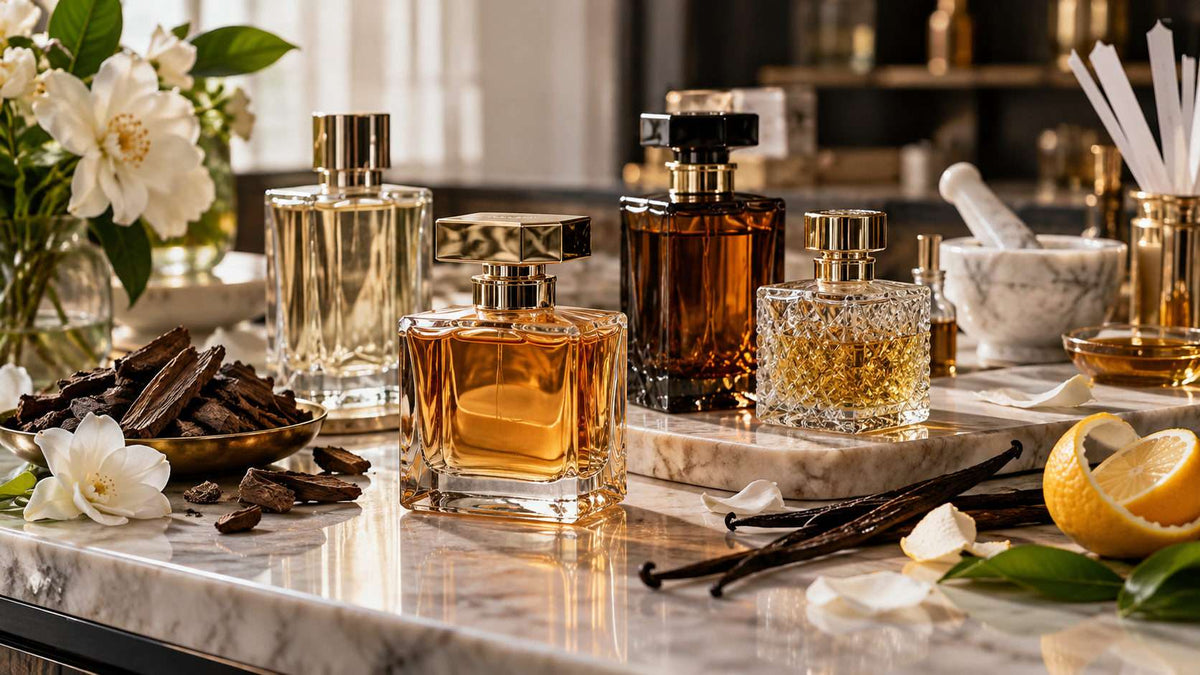
Designer fragrances can cost well over £100 because the price covers far more than the scented liquid inside the bottle. Brand prestige, advertising, packaging, retail distribution, product development and ingredient sourcing can all contribute to the final figure.
Some of those costs influence the fragrance itself. Others pay for the wider luxury experience surrounding it. Understanding the difference helps you judge whether a designer bottle delivers value for your priorities, or whether an inspired fragrance offers a more practical route to the scent style you want.
The Designer Brand Name Comes at a Premium
A recognised fashion or fragrance house can command a higher price because its name carries value. Luxury brands spend years building reputation, identity and exclusivity, which can shape how customers perceive their products. Buyers may therefore pay for prestige, heritage and the experience of owning a release alongside the scent itself. That premium can matter to brand-focused shoppers, yet it does not prove the fragrance will suit your skin, smell better to you or perform more than a lower-priced alternative.
Celebrity Endorsements and Advertising Increase the Cost

Major fragrance launches can involve celebrity ambassadors, photography, video production, social campaigns, events and international advertising. These activities help designer houses build recognition and position a scent within the luxury market. They also contribute to the final retail price. Marketing can strengthen brand appeal and demand, yet it does not increase fragrance-oil concentration or guarantee stronger wear. For value-conscious buyers, part of the premium may fund the campaign surrounding the fragrance rather than the formula itself.
Luxury Bottles and Packaging Add to the Price
Custom glass, distinctive caps, presentation boxes and decorative finishes can all increase production costs. For collectors and gift buyers, this presentation may form part of the appeal. Packaging does not influence how the fragrance develops on skin, however, which matters for shoppers focused on scent and value.
More streamlined options, including Mister Fragrance's men's inspired aftershaves, can place greater emphasis on the fragrance itself rather than elaborate designer presentation.
Premium Retail Locations Have Higher Overheads
Department stores, luxury boutiques and prime shopping locations carry significant operating costs. Retailers need premises, staff, displays, testers, storage and day-to-day services, all of which can influence the final selling price.
These expenses can improve the shopping experience by giving customers access to in-person testing and advice. They do not indicate fragrance quality on their own. For value-focused buyers, part of the premium may reflect where the scent is sold rather than what is inside the bottle.
Distributors and Retailers Add Their Own Mark-Ups
Designer fragrances can pass through several commercial stages before reaching the customer.
|
Stage |
Main Role |
|
Manufacturer |
Develops and produces the fragrance |
|
Distributor |
Moves products into retail markets |
|
Retailer |
Sells the fragrance to customers |
|
Customer |
Pays the final retail price |
Each stage can add costs to the final price. Structures and margins vary between brands, which means the shelf price reflects more than manufacturing alone.
Exclusivity Allows Fragrance Houses to Charge More
Limited releases, selective distribution and premium positioning can increase a fragrance's perceived value. Some buyers will pay more for rarity, collectability or the experience of owning a less widely available scent. That premium may be worthwhile when exclusivity matters to the purchase.
For everyday wear, however, scarcity adds little to the fragrance itself. Value-focused shoppers may prefer to judge a scent by its profile, concentration and suitability rather than how restricted or prestigious its availability appears.
Developing an Original Fragrance Requires Time and Expertise

Creating a commercial fragrance involves creative, technical and regulatory work. Perfumers develop and refine compositions using carefully selected fragrance materials, adjusting balance, structure and development over time. Products must also meet relevant safety and cosmetic requirements before launch. Testing, reformulation, stability considerations and manufacturing preparation can all add to development costs.
These expenses relate directly to creating the scent, making this one area where a higher price can reflect genuine expertise rather than branding alone.
Some Fragrance Ingredients Are Expensive to Source
Fragrance materials vary widely in cost, availability and production method. Natural ingredients may require harvesting, extraction and careful processing, while synthetic aroma materials involve research and technical manufacturing. Neither category is automatically better.
Modern perfumery relies on both for different creative and functional reasons. Ingredient costs can influence fragrance pricing, although a high retail price does not reveal which materials were used or how much they contributed. Price alone is therefore not proof of superior ingredients.
Designer Fragrances Carry the Cost of Launching the Original Scent
Launching an original designer fragrance involves more than developing the formula. Brands may invest in creative direction, naming, bottle design, packaging, manufacturing preparation and promotional activity before the product reaches customers.
These costs help turn a scent into a complete commercial release. They can justify part of the premium, although they do not all improve the fragrance itself. For value-focused buyers, it is worth separating the cost of creating the product from the cost of launching it.
Higher Prices Do Not Always Mean Better Concentration or Performance
A higher price does not guarantee greater concentration or stronger wear. Fragrance strength depends on the formula, while performance also varies with ingredients, application, skin, temperature and environment.
Mister Fragrance uses a verified 35–40% fragrance-oil concentration in its Extrait de Parfum formulas, giving shoppers a clear concentration-led reason to consider the range. Even so, no concentration level can promise a fixed wear time or identical projection for every person.
Inspired-by Fragrances Remove Many of the Luxury Costs
Inspired-by fragrances can offer stronger value by operating without every expense associated with a global designer launch.
They may use more straightforward packaging, more focused promotion and direct-to-consumer retail models. They do not need to recreate the prestige ecosystem surrounding a major fashion house.
This does not mean an inspired fragrance is the same formula as the designer scent that influenced its direction. Mister Fragrance products are independently created and are not produced by, affiliated with or endorsed by designer brands.
The advantage lies elsewhere: shoppers can explore familiar fragrance styles while putting more emphasis on concentration and value.
Mister Fragrance's women's inspired perfumes use the brand's 35–40% Extrait de Parfum concentration, giving value-conscious buyers a clear alternative to paying for designer positioning.
Do You Need to Buy a Designer Fragrance to Get Good Quality?
No. A designer name can add prestige, originality, presentation and collectability, yet price alone cannot tell you whether a fragrance will be the best choice for you.
Buying a designer makes sense when you specifically want the original composition, bottle, brand experience or collectable appeal.
Inspired fragrances become more compelling when your priorities are scent style, high concentration, variety and making your fragrance budget go further.
The most useful question is not whether designer perfume is "too expensive". Ask what the higher price is paying for, then decide which parts of that experience matter to you.
For shoppers who value fragrance concentration and luxury-inspired scent profiles more than designer branding, Mister Fragrance's Extrait de Parfum range offers a focused alternative without requiring the same premium-price experience.


